


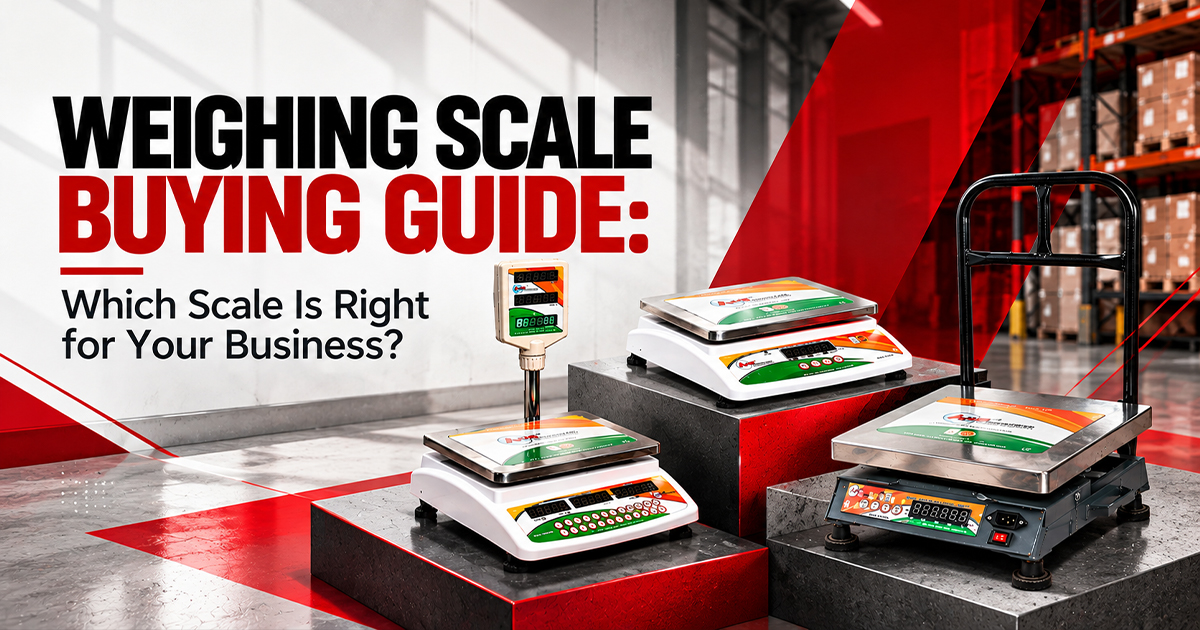
Choosing the right weighing scale is about more than selecting a capacity and comparing prices. For businesses, the right weighing equipment needs to match the material being weighed, required accuracy, working environment, platform size and frequency of use.
Whether you need a commercial weighing scale, industrial platform scale, bench scale or precision balance, selecting the right solution can improve day-to-day weighing and reduce avoidable operational issues.
With 15+ years of experience and a portfolio of 100+ weighing products, Axis International provides weighing solutions for different commercial and industrial requirements.
The key factors are capacity, accuracy, application, platform size, construction, operating environment and long-term support.
Before choosing a weighing machine, understand what you need to weigh, how often you will use it and where the scale will operate.
Capacity is one of the first specifications to consider.
The scale should comfortably handle your normal weighing requirements rather than being selected only for its maximum capacity. Consider both the typical load and the heaviest load you expect to weigh.
For example, a business handling smaller goods may need a bench or compact weighing solution, while manufacturing and logistics operations may require a higher-capacity platform or industrial weighing scale.
Quick answer: Choose a scale whose capacity comfortably covers your regular weighing range while remaining appropriate for the application.
Capacity and accuracy are not the same thing.
A retail operation, manufacturing unit and laboratory may have very different accuracy requirements. If small differences in weight can affect product quality, pricing or production, accuracy becomes a critical selection factor.
For higher-precision applications, businesses should consider a suitable precision weighing scale rather than relying on a general-purpose model.
The best weighing scale is the one designed for your working requirement.
Retailers, shops and food businesses may require practical scales for frequent day-to-day weighing and transactions.
Manufacturing, warehouses and material-handling operations may need robust platform or industrial weighing solutions capable of handling demanding workloads.
Applications requiring finer measurements may need a precision balance designed around more accurate weighing requirements.
The important point is to choose according to the application, not simply the price or appearance of the machine.
Not sure which weighing scale suits your application?
Speak with a weighing equipment specialist at Axis International and discuss your capacity, accuracy and operating requirements before making a decision.(https://axisweigh.com/contact-us/)
Platform size should match the dimensions and handling method of the items being weighed.
A platform that is too small can make weighing awkward, while an unnecessarily large platform may not be practical for every workspace.
Consider:
Where will the scale be used?
A clean indoor environment may have different requirements from a busy warehouse, manufacturing facility or commercial workplace.
Consider factors such as:
Discuss the working environment with your data-type=”link” data-id=”https://youtube.com/shorts/mNuKxLp9HpQ”>weighing scale manufacturer so the equipment can be matched to the actual application.
Price is important, but it should not be the only factor.
A more useful comparison considers the overall value of the weighing solution, including suitability, reliability, technical support, maintenance and expected working requirements.
A low-cost scale that does not suit the application may create greater costs over time through operational interruptions or replacement.
The manufacturer you choose can be as important as the equipment itself.
Look for evidence of:
Axis International has 15+ years of expertise and 100+ weighing products, supported by ISO certification and MSME registration, along with Government of India and West Bengal approvals as stated by the company.
This experience helps businesses evaluate weighing requirements more systematically rather than simply choosing a product from a catalogue.
Axis International is an Indian manufacturer of digital weighing scales with 15+ years of industry expertise and 100+ products.
The company focuses on weighing solutions for commercial and industrial requirements, supported by manufacturing experience and a broad product portfolio.
Businesses can explore the company’s range of weighing solutions and select equipment according to their specific application.
Capacity and accuracy are important, but the scale should ultimately be selected according to the application, operating environment, platform requirements and expected workload.
Identify the typical and maximum loads you need to weigh, then select a suitable capacity that comfortably covers your regular requirements.
Commercial scales are generally designed for business and retail weighing requirements, while industrial weighing scales are intended for applications involving heavier loads and more demanding working environments.
No. Price should be considered alongside suitability, accuracy, capacity, quality, support and long-term operational requirements.
An experienced manufacturer can help match the weighing equipment to your application and provide product knowledge and technical support.
The right weighing scale should fit your business — not the other way around.
Before buying, define your capacity, accuracy, platform size, application and working environment. Then compare manufacturers based on product capability, quality, experience and support.
Ready to find the right weighing solution for your business?
Explore Axis International’s weighing scale range or contact the team to discuss your application.
Need help choosing the right weighing scale? Contact Axis International for an application-focused weighing solution. (https://axisweigh.com/contact-us/)
About the Author-
Rakesh Kumar
Technical Content Strategist | Industrial Weighing & Manufacturing Solutions (Axis International Corporation)
